Christina Wolfe | RORC Member Feature
From the Pacific Northwest to the Solent, RORC member Christina Wolfe has found much more than world-class competition. Sailing double-handed with her husband Justin for over 30 years, the American offshore racer has discovered a community that shares her passion for learning, friendship and the challenges of racing offshore.
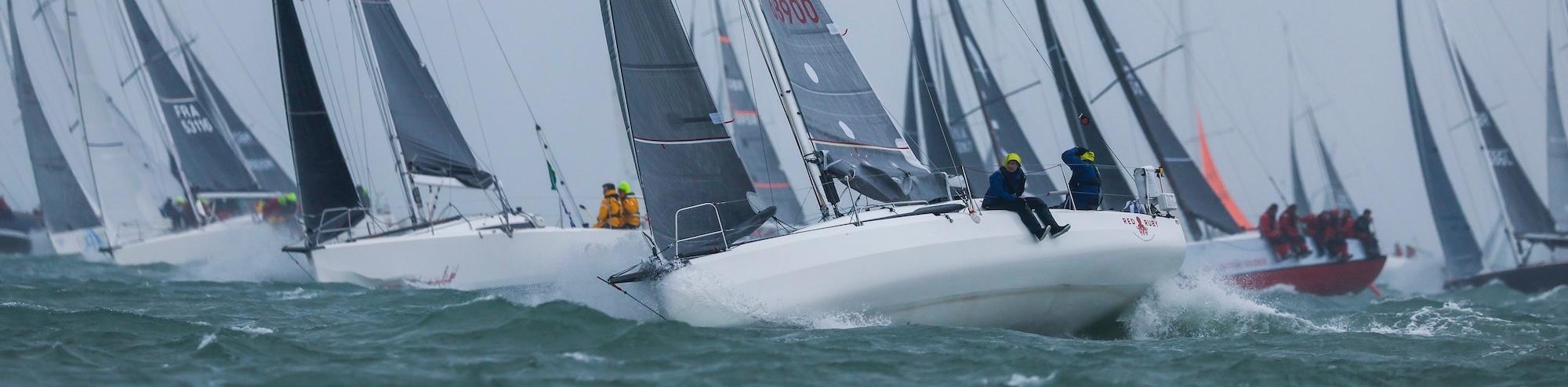
When Christina Wolfe and Justin first arrived on the Solent with their Sun Fast 3300 Red Ruby, they had travelled more than 4,000 miles from their home waters in the Pacific Northwest of the United States. They came in search of competitive double-handed racing. What they found was something that has kept drawing them back.
Christina is one of America’s most accomplished Corinthian offshore sailors. Named US Sailing’s 2023 Rolex Yachtswoman of the Year, she has competed at the highest level of short-handed sailing, including the Rolex Fastnet Race and Rolex Middle Sea Race. In 2023, Christina and Justin finished second overall under IRC in the Mediterranean classic, missing victory by just 24 seconds, while winning overall under ORC.
But for Christina, the attraction of racing goes well beyond trophies. It is about the challenge of becoming a better sailor, sharing experiences with people who have the same enthusiasm, and being part of a community where knowledge and friendship matter.
A Partnership Built on the Water
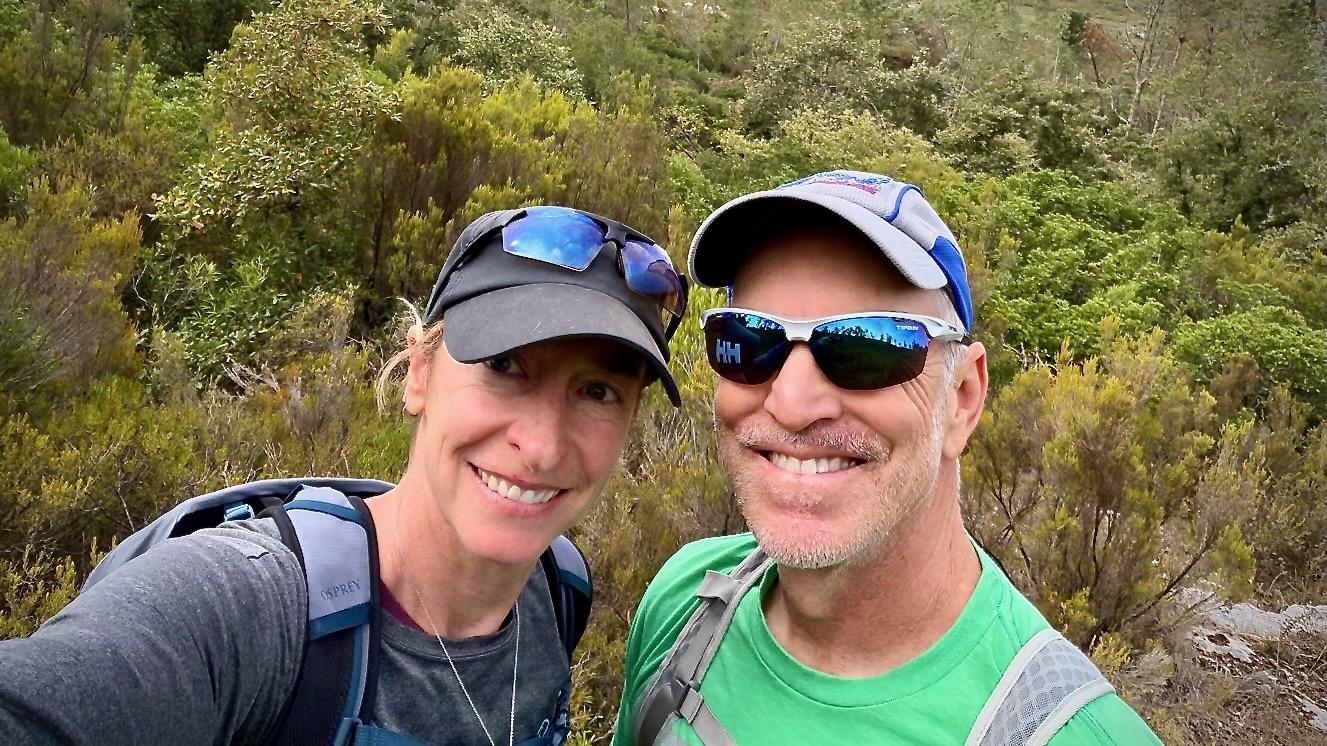
Christina and Justin’s sailing partnership began in 1995 when they met through a local double-handed race in Seattle. More than three decades later, their shared enthusiasm for the sport remains central to their lives.
They are not professional sailors, yet their approach to racing is remarkably disciplined. Together, they have developed a system of preparation, communication and mutual understanding that allows them to compete against some of the best offshore sailors in the world.
“We definitely are not professional sailors, but I think we treat sailing as something pretty serious,” explains Christina. “We want to make the most of every minute that we have on the boat.”
That philosophy has shaped how they train. Much of their preparation takes place away from the water, studying weather routing, reviewing performances and discussing manoeuvres in detail. Alongside them is their sailing partner and coach Jonathan McKee, an Olympic gold medallist and accomplished short-handed offshore sailor.
“We plan things out and we debrief after races so that we’re sharing the learning that we’re doing,” says Christina. “We spend a lot of time just thinking about specific actions. If we’re going to peel a kite, we visualise things and we talk through them.”
For Christina, limited time on the water has become an incentive to use every opportunity intelligently. The challenge is not simply to sail more, but to make every hour count.
Crossing the Atlantic for Competition
The Wolfes’ decision to race in Europe grew from their experience of double-handed sailing in the United States and a growing awareness of the opportunities on the other side of the Atlantic.
“Short-handed offshore racing is dominated by the French, which we know,” says Christina. “But what happened around COVID in the UK with the UK double-handed offshore series was really remarkable.”
Representing the United States at a double-handed world championship event in Italy opened their eyes to the depth of European competition. There they met British sailor Gavin Howe, making connections that would eventually lead them to the Solent and RORC.
“The big draw was just so much more short-handed sailing in Europe, and the UK was an obvious starting point.”
Their first encounters with the Solent were memorable. Accustomed to the generally lighter winds of the Pacific Northwest, Christina was surprised by the conditions that British sailors appeared to regard as entirely normal.
“The Solent has so much history, and it was initially somewhat intimidating,” she recalls. “The first time we sailed Red Ruby, we went out, and I think it was just steady 25 [knots], and there were a number of boats out there just out for a jaunty sail. You would not necessarily see that in the Pacific Northwest.”
Far from discouraging the Americans, the conditions reinforced their enthusiasm. “It’s exhilarating sailing what you get in the Solent, and then there’s the history, and then there’s the people.”
Learning Through RORC Racing
The Wolfes began their European campaign with shorter offshore races, progressing through events such as the De Guingand Bowl and Myth of Malham before taking on the Rolex Fastnet Race and Rolex Middle Sea Race.
It proved an effective way to learn their boat and prepare for the demands of longer offshore competition.
“That progression that we took for sure was a great way of both learning how to sail the Sun Fast 3300, but also managing an endurance race,” says Christina. “A 600-mile race is very different from a 100-mile race in terms of the challenges on your body, dealing with lack of sleep and how you manage all of that.”
She compares the different demands of offshore racing to athletics, where sprinters, middle-distance runners and endurance athletes all require distinct skills.
For Christina, this is part of the fascination. Each race presents new challenges, demanding different combinations of preparation, judgement and physical endurance.
The results demonstrate just how effective their approach has become. The Wolfes finished second in the UK Double-Handed Offshore Series in both 2022 and 2023, while their 2023 campaign brought outstanding performances in the Rolex Fastnet Race and Rolex Middle Sea Race, alongside success at the ORC Double-Handed World Championship in Barcelona.
More Than a Racing Club
Ask Christina what has made the greatest impression during her time racing with RORC, and the conversation quickly moves away from results towards people.
“Oh, so important, so important,” she replies when asked about the friendships and shared knowledge that have developed through the Club. She speaks warmly of RORC Commodore Deb Fish, Gavin Howe and Maggie Adamson, Ellie and Jim Driver and the many other sailors she has come to know. These relationships have endured beyond individual races, with friendships continuing across countries and sailing campaigns.
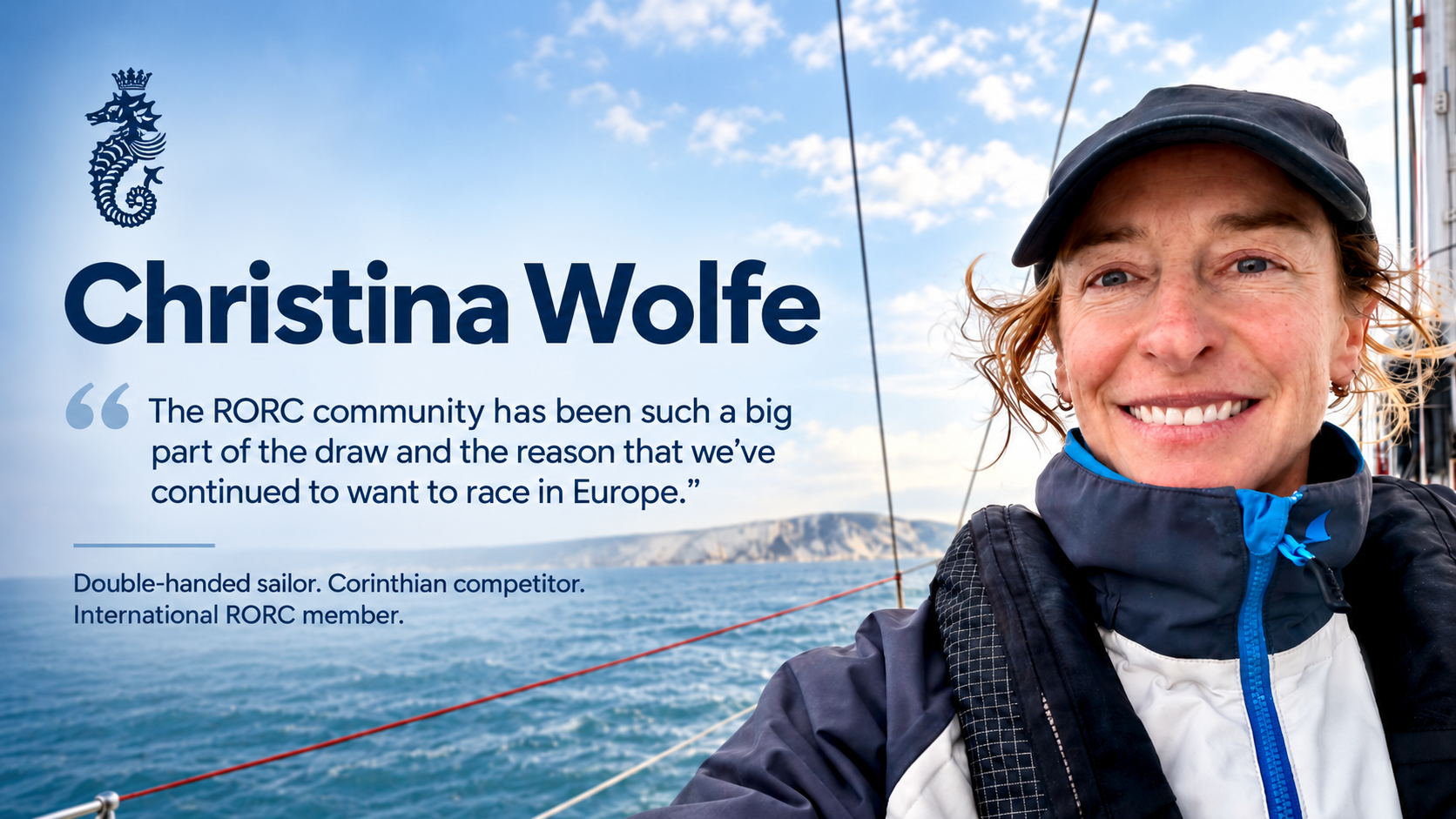
“The RORC community has been such a big part of the draw and the reason that we’ve continued to want to race in Europe.”
Christina particularly values the willingness of sailors to share knowledge and help one another improve. She sees the UK Double Handed Offshore Series community as an example of how a competitive sport can also be welcoming and collaborative. That outlook extends to the next generation. “One of the neatest things that RORC is doing is supporting younger sailors through the Griffin Programme,” she says.
For someone who has built a successful offshore racing partnership outside the professional sailing world, creating opportunities for younger sailors and helping them develop their skills are values that resonate strongly. “We’re definitely looking for more opportunities to spend in the Solent, just because we have people that we call not just other sailors, but friends.”
A Club Without Borders
Christina’s experience illustrates something distinctive about RORC. Although the Club’s roots and much of its racing programme are firmly established in Britain, its membership and racing community extend far beyond the British Isles.
For an American sailor living thousands of miles away, RORC has become a place where shared enthusiasm for offshore racing matters more than geography.
Christina and Justin have now established a home in Portugal, creating a European base from which they intend to spend more time racing in European waters. It is a natural progression for a couple whose enthusiasm for offshore competition has taken them across the Atlantic and introduced them to a new sailing community.
Although their plans for 2027 are not yet finalised, Scandinavian and North Sea events are among the possibilities, alongside a potential return to the UK for the Rolex Fastnet Race. With a home in Portugal, the opportunities to explore new racing grounds and renew friendships across Europe are greater than ever.
For Christina, the Club’s international appeal is one of its greatest strengths. “What RORC has really done for the sport of sailing, it’s a good reminder that it’s attracting not just sailors in the UK, but it’s a club that has been accessible to the international community.”
Christina and Justin crossed the Atlantic looking for better racing. They found outstanding competition, but also a community to which they want to return.