
Lanzarote: Atlantic Ocean Racing, Sport and Adventure
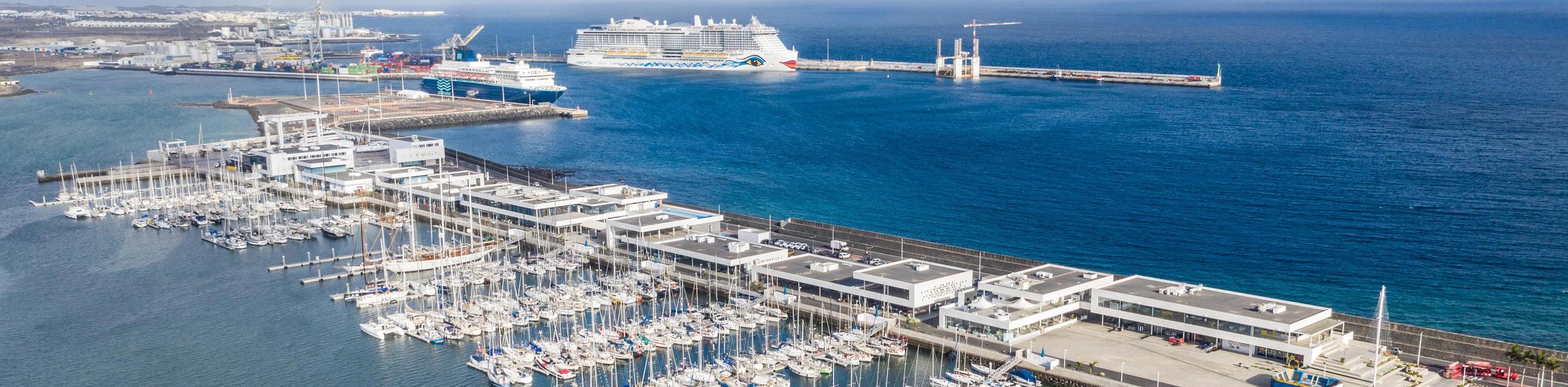
On Sunday 10 January 2027, the 13th edition of the RORC Transatlantic Race will start from Calero Marinas Marina Lanzarote bound for Antigua, West Indies. Organised by the Royal Ocean Racing Club in association with the International Maxi Association and Yacht Club de France, the race attracts an international fleet ranging from high-performance multihulls and maxis to Class40s, performance cruisers and double-handed teams.
.jpg) Calero Marinas - Marina Lanzarote, Canary Island will welcome the 13th edition of the RORC Transatlantic Race in January 2027 © James Mitchell/RORC
Calero Marinas - Marina Lanzarote, Canary Island will welcome the 13th edition of the RORC Transatlantic Race in January 2027 © James Mitchell/RORC
Marina Lanzarote: Where the Race Really Begins
The RORC Transatlantic Race does not begin when the starting signal sounds. For Marina Lanzarote, it begins months earlier, as boats arrive from across Europe and beyond, shore teams begin work and sailors turn their attention towards 3,000 nautical miles of open-ocean racing.
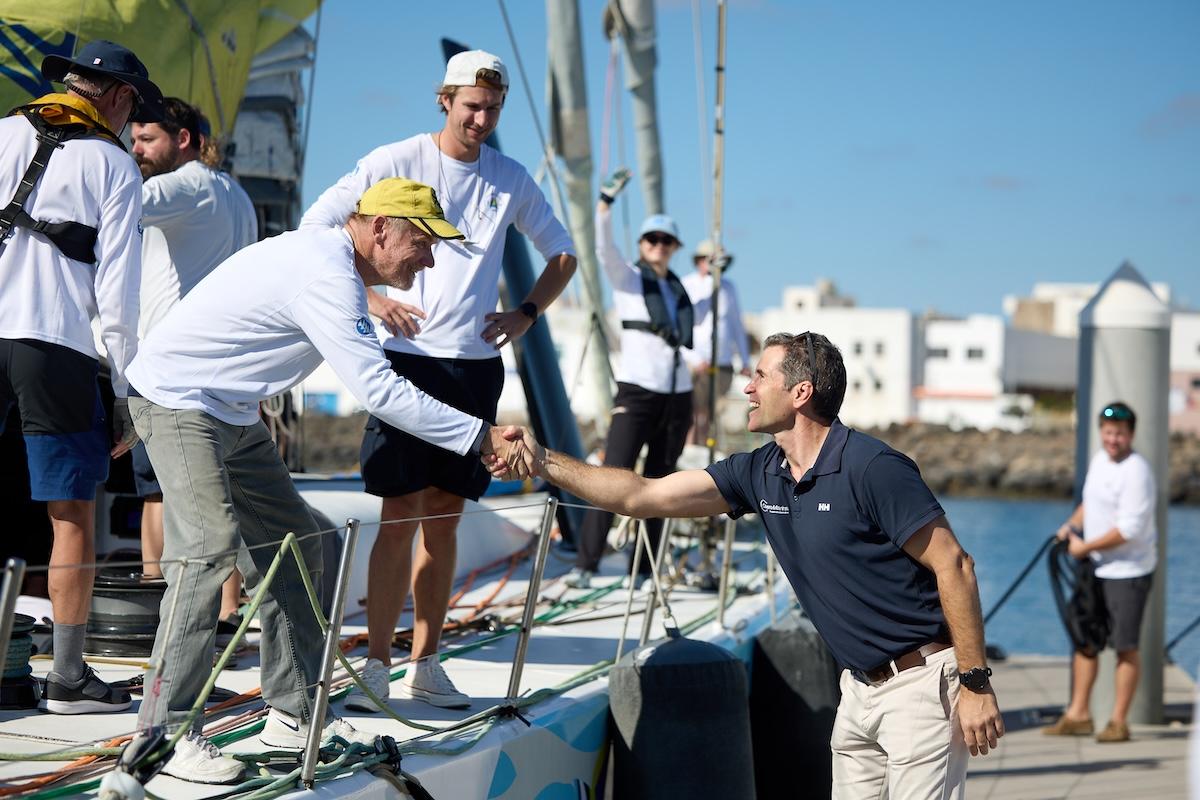 Calero Marinas CEO José Juan Calero bids competitors farewell before the race gets underway © James Mitchell/RORC
Partnership Spanning 13 Years
For more than a decade, Calero Marinas and Lanzarote have welcomed the RORC Transatlantic Race fleet with professionalism, pride and enthusiasm. On 10 January 2027, Marina Lanzarote will once again become the point where final preparations end, the dock lines are released, and the adventure truly begins.
José Juan Calero, CEO of Calero Marinas commented: “We are proud that Marina Lanzarote will once again host the start of the RORC Transatlantic Race and continue to strengthen a relationship with the Royal Ocean Racing Club that now spans more than a decade. We have invested in developing the technical capabilities of our marina to meet the demands of an event of this calibre, ensuring competing teams have the best possible facilities before setting out across the Atlantic. At the same time, this race showcases Lanzarote’s position as an international destination for sailing, sport and sustainable nautical tourism, while bringing the local community closer to an event that has become part of the island’s identity.”
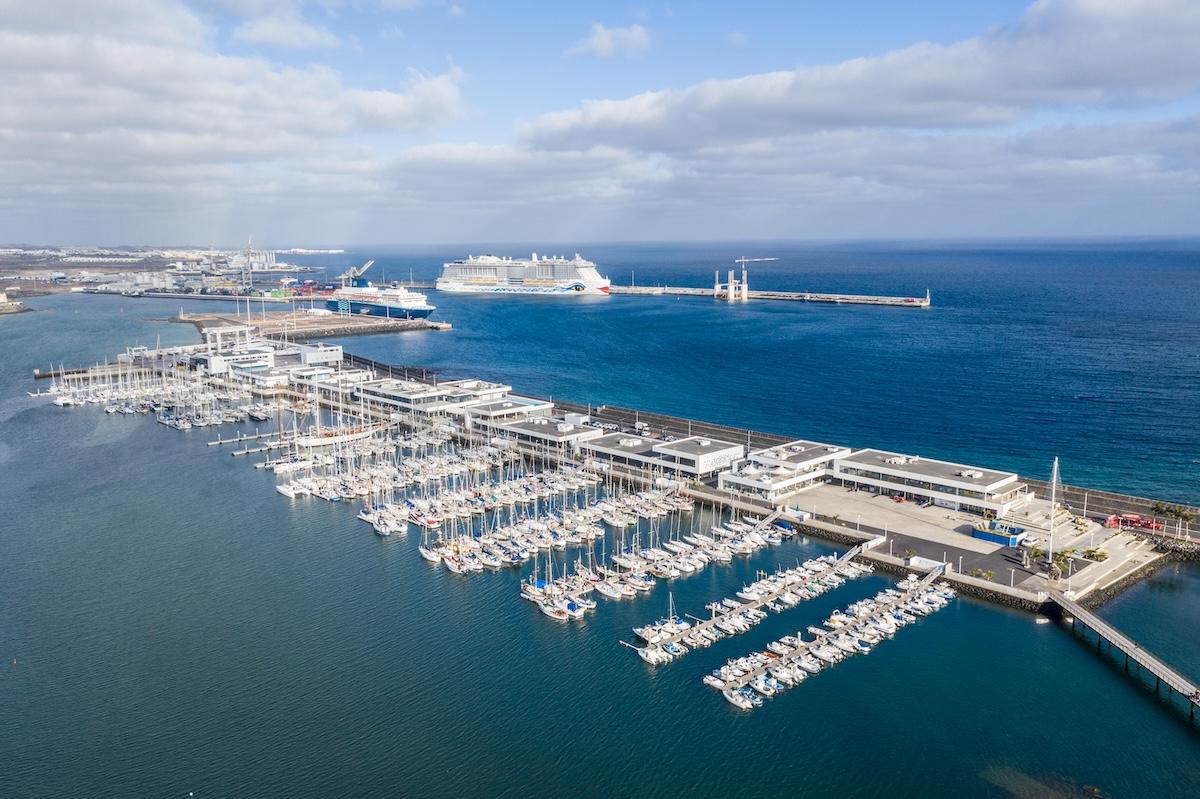 Calero Marinas Marina Lanzarote sits right in the heart of Arrecife, the capital of Lanzarote, Canary Islands © Calero Marinas
The Final Countdown to the Start
For every competitor, Marina Lanzarote is where an ambitious campaign enters its final and most intense pre-race phase. By the time the fleet gathers in Arrecife, thousands of hours will have been invested in design, maintenance, qualification, preparation and training. The marina becomes the working centre of the race, where final jobs are completed before the boats head into the Atlantic.
Located in the maritime heart of Arrecife, Marina Lanzarote provides immediate access to the island’s capital and is only a short distance from Lanzarote Airport. Deep-water berthing, technical services, restaurants, shops and everyday facilities are all close at hand.
For well-run campaigns, those practical advantages are critical. Crew can arrive easily, equipment can be shipped efficiently, and specialist contractors can work on the boats without teams becoming isolated from the city.
The Fleet Gathers
As the start approaches, the atmosphere changes. The boatyard becomes busier, weather discussions become more serious, and the marina fills with the distinctive energy of an international fleet preparing to race an ocean. The social programme also gathers pace, with relaxed occasions for the teams and a Gala Dinner bringing the fleet together before departure.
The true value of Marina Lanzarote is best measured not simply by its facilities, but by the confidence sailors feel when they leave the dock.
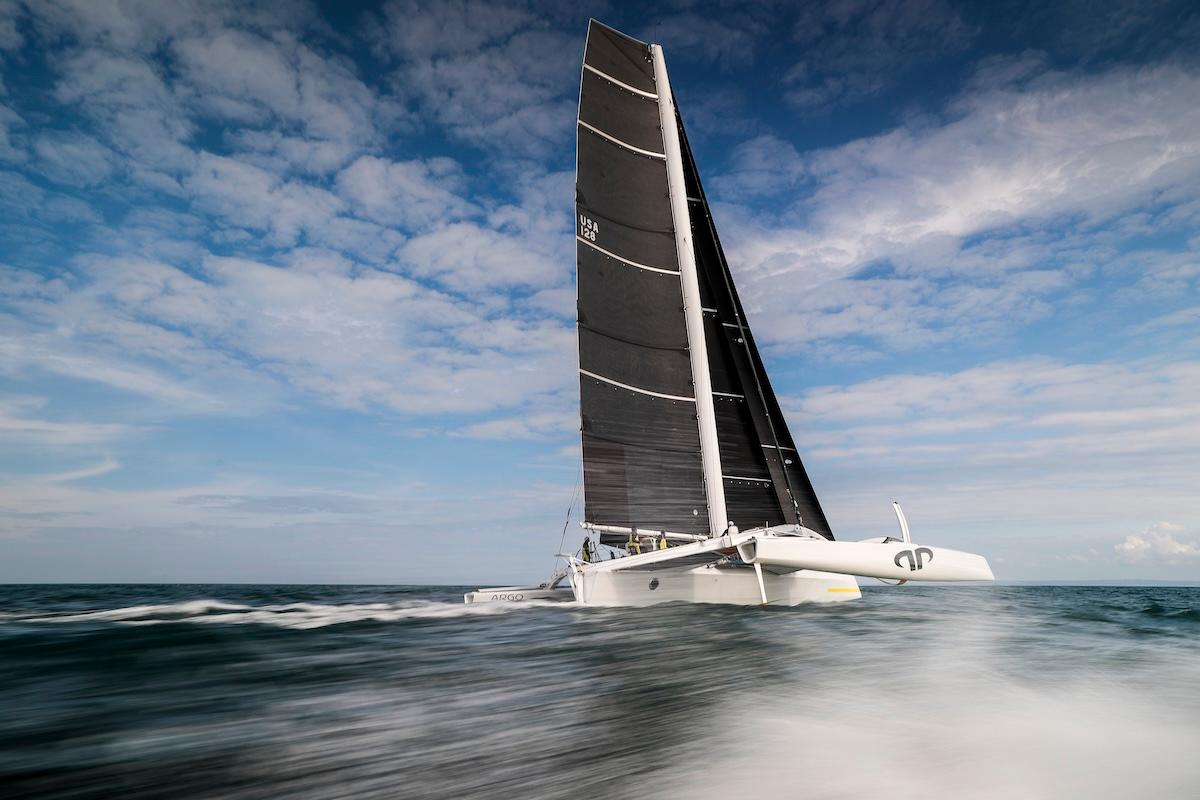 MOD70 Argo © Paul Wyeth/RORC
Case Study: Argo's Atlantic-Winning Refit
Ahead of the 2026 race, Jason Carroll’s MOD70 Argo spent almost three months in Lanzarote. The 70-foot trimaran was lifted out at Marina Lanzarote in October, underwent an extensive refit and returned to the water in December for training.
Argo project manager Chad Corning described the yard period as the foundation of the team’s Atlantic campaign. “We want to control as many variables as we can,” said Corning. “The yard period in Lanzarote sets the table for that.”
Argo underwent non-destructive testing, with major structural points, the mast and appendages scanned and compared with an archive of previous inspections. Mechanical systems were removed, serviced and rebuilt, including foil and rudder bearings, winches and hydraulics.
The purpose was not simply to repair the boat, but to identify minor issues ashore before they could become major problems offshore. That work allowed the team to leave Lanzarote confident that Argo’s systems were operating at the highest possible level. The preparation was rewarded when Argo won the multihull battle and established a new race record from Lanzarote to Antigua.
The same principle applies whether the boat is a record-breaking trimaran, a fully crewed maxi or a Corinthian team taking on its first Atlantic race: preparation ashore creates confidence offshore.
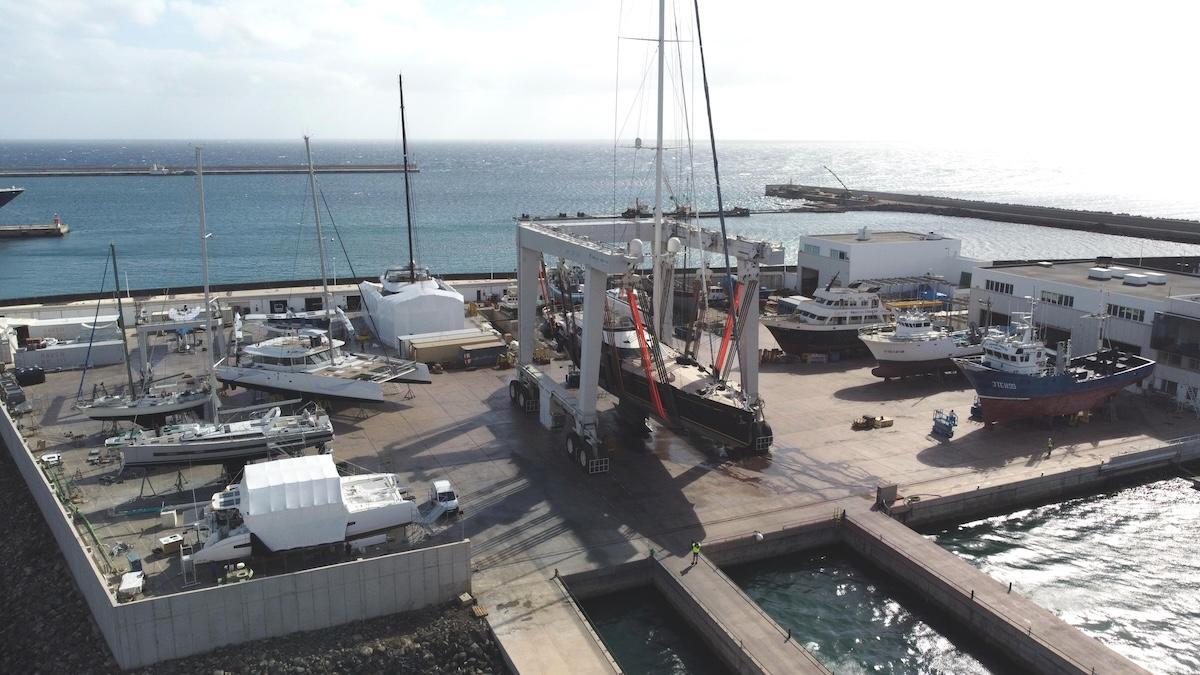 Marina Lanzarote 820-tonne travel lift © Calero Marinas
World-Class Shipyard Facilities
Marina Lanzarote supports that preparation with facilities capable of accommodating some of the world’s most complex racing yachts. The shipyard includes an 820-tonne travel lift, more than 20,000 square metres of working area, two deep-keel pits and lifting dimensions suitable for superyachts, multihulls and racing yachts.
Visiting campaigns can also access office space, container storage and specialist technical services during refit and maintenance periods. Marina Lanzarote provides the time, space and support needed to inspect critical components before a boat returns to the water, at rates significantly lower than many established northern European marinas.
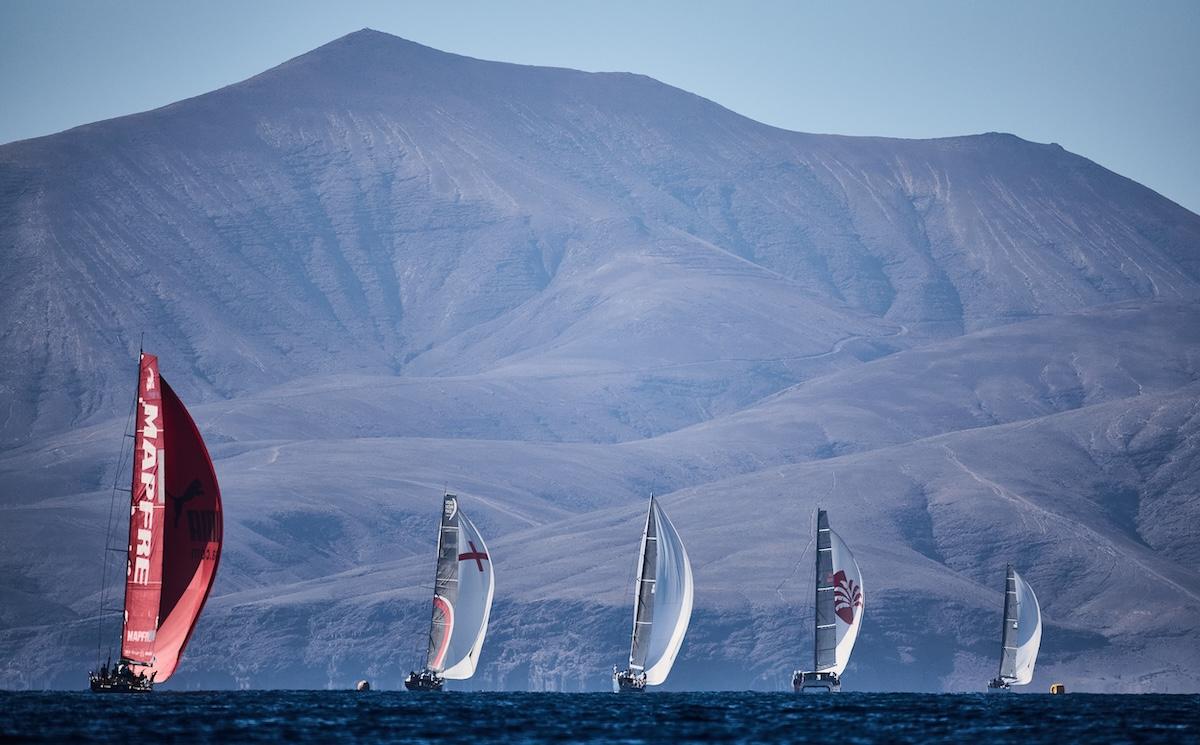 Lanzarote's volcanic terrain forms a spectacular backdrop for the RORC Transatlantic Race © Robert Hajduk (@r_hajduk)
Lanzarote: An Atlantic Hub for Sport and Sustainable Tourism
Its role in the RORC Transatlantic Race also forms part of a wider ambition for Lanzarote. The island is proudly an Atlantic hub for sport, nautical tourism and sustainable travel, using its climate, landscape and maritime heritage to attract athletes, teams and international events throughout the year.
Consistent winds, mild winter temperatures and direct access to the Atlantic provide excellent conditions for sailing and watersports. Surfing, kiteboarding and road cycling are also popular with sailors, giving crews the opportunity to train or simply enjoy the island away from the boatyard.
Beyond the coast, Lanzarote’s volcanic terrain and extensive road network create a natural training environment for cyclists, runners, triathletes and endurance athletes. The combination has helped the island build a strong reputation as a destination where elite sport, outdoor activity and tourism work together.
A Historic Gateway, A Modern Fleet
For centuries, the Canary Islands have been a natural staging point for vessels preparing to cross the Atlantic. Today, Lanzarote combines that historic role with modern sporting infrastructure, international air connections and the technical capabilities required by contemporary racing yachts.
The RORC Transatlantic Race forms part of that wider vision. Lanzarote’s greatest assets is the Atlantic Ocean, the trade winds, its volcanic landscape and a climate that allows athletes to train outdoors throughout the European winter. This creates a close relationship between sporting success, tourism and protection of the island’s natural environment.
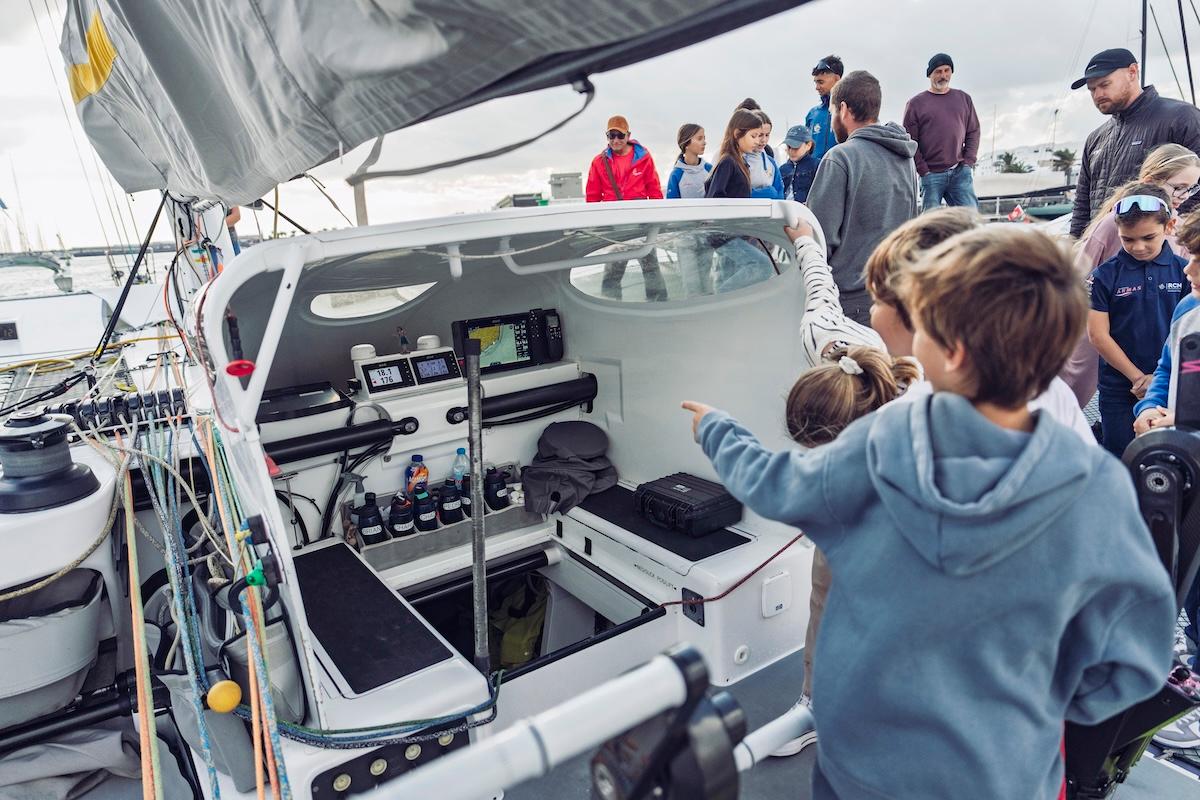 The crew of Jason Carroll's MOD70 Argo welcomed the next generation of offshore sailors on board © James Mitchell/RORC
Part of the Calero Marinas Legacy
Marina Lanzarote is also part of the wider Calero Marinas story. The family-run group has spent more than four decades developing marinas and services for visiting sailors, ocean passages and international racing campaigns. As the fleet gathers, school visits, social occasions and public activities bring the community closer to the race. Sailors experience Lanzarote’s culture, food and hospitality, while residents and visitors gain a close-up view of the boats and personalities preparing to take on the Atlantic.
-DSC07254.jpg) A programme of social events in the lead-up to the race brings teams together, fostering camaraderie before the challenge begins © James Mitchell/RORC
A programme of social events in the lead-up to the race brings teams together, fostering camaraderie before the challenge begins © James Mitchell/RORC
Enter the 2027 RORC Transatlantic Race
Online entry is open for the 2027 RORC Transatlantic Race, starting from Marina Lanzarote on Sunday 10 January 2027 and finishing in Antigua, West Indies. Visit: SailRaceHQ