MOD70s ignite Atlantic afterburners
2026 RORC Transatlantic Race: Day 4 fleet update - 14 January 2026
Four days into the 2026 RORC Transatlantic Race, the fleet has fully escaped the Canary Islands and locked into the rhythm of the trade winds. The Atlantic has opened its throttle and the results are dramatic: a rising and sometimes confused sea state, soaring speeds, eye-watering daily mileages and a leaderboard that promises tension all the way to Antigua.
MOD70s at warp speed
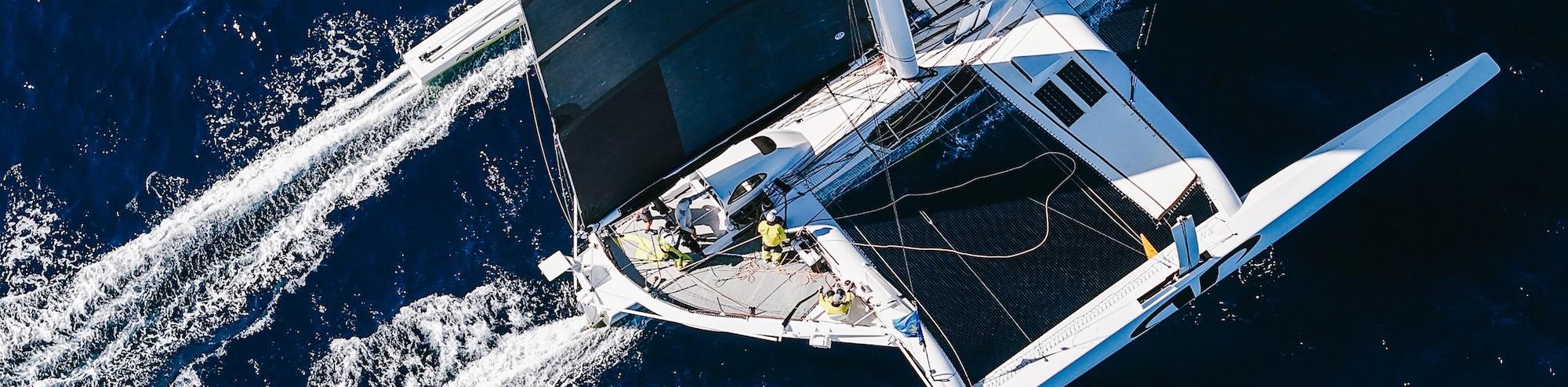
At the very front of the fleet, the MOD70 trimarans are delivering a jaw-dropping masterclass in extreme ocean racing. Jason Carroll’s Argo and Erik Maris’ Zoulou are routinely charging through the high twenties and punching past 30 knots as the breeze builds. On board Argo, helms are being rotated every 45 minutes, drivers stepping away with red, stinging eyes after battling the relentless jet wash of salty spray.
.jpeg) Jason Carroll's MOD70 Argo © Pete Cumming/Argonauts
Jason Carroll's MOD70 Argo © Pete Cumming/Argonauts
As of 1400 UTC on Wednesday 14 January, Argo holds an advantage of approximately 50 nautical miles over Zoulou and is just over 1,000 miles from the finish in Antigua. At this pace, the MOD70s are shaping up for a crossing time of under five days, a staggering prospect that underlines just how far offshore multihull performance has advanced.
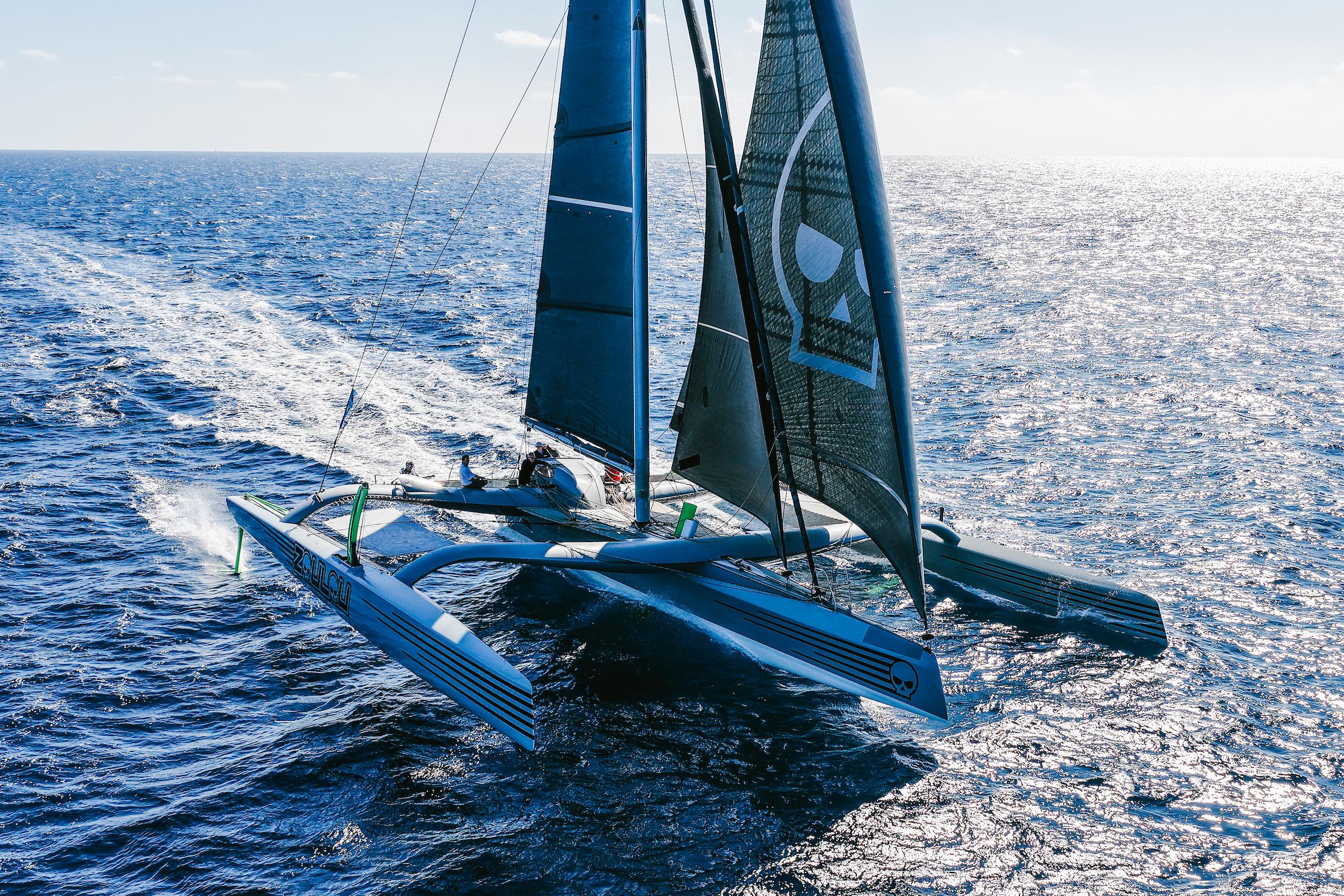 Erik Maris' MOD70 Zoulou © Sailing Energy
But the Atlantic still has cards to play. A developing weather system to the north could yet disrupt the trade winds as the trimarans close on the finish. At these speeds, a small shift could mean a big swing. While Argo sits confidently in the driving seat, Zoulou remains very much in range, with only hours separating them if the conditions tighten.
.jpeg)
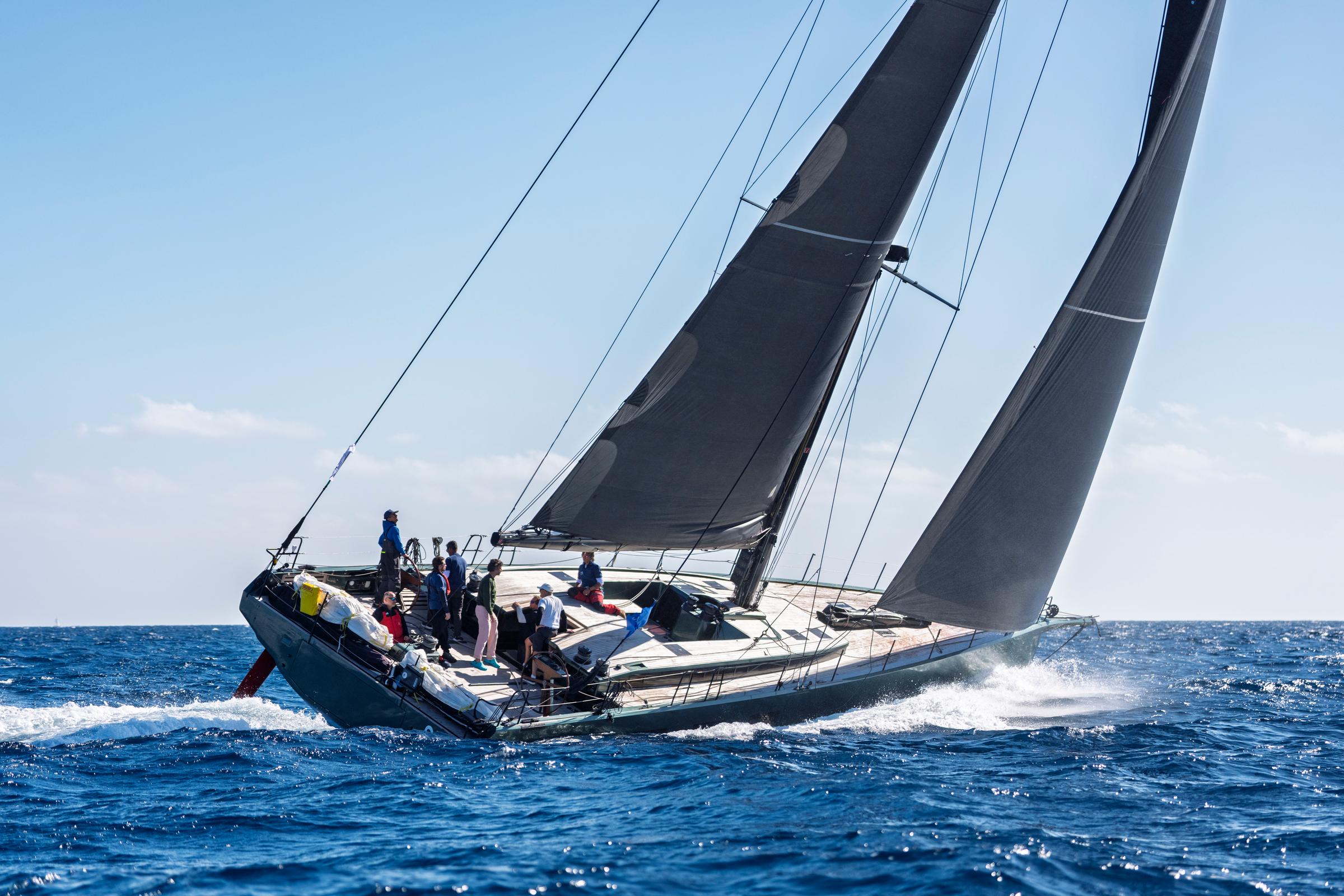
Raven @carloshernandezrobayna
Raven stretches the monohull fleet
Among the monohulls, Raven continues to assert her authority, leading on the water by nearly 200 nautical miles over her nearest challenger, Oliver Magre’s Mach 50 Palanad 4. Raven’s Navigator Will Oxley reports that with approximately 1,600 nautical miles remaining, the Baltic 111 is forecast to finish in Antigua around 1200 UTC on Sunday 18 January. That would deliver an elapsed time of just seven days, an exceptional performance for a monohull on this course.
Raven is sailing a high apparent wind VMG mode, trading distance for sustained speed and foil efficiency. It is a technically demanding style of sailing, but one that is paying off handsomely. However, with IRC time correction still to be applied, the overall race remains far from settled.
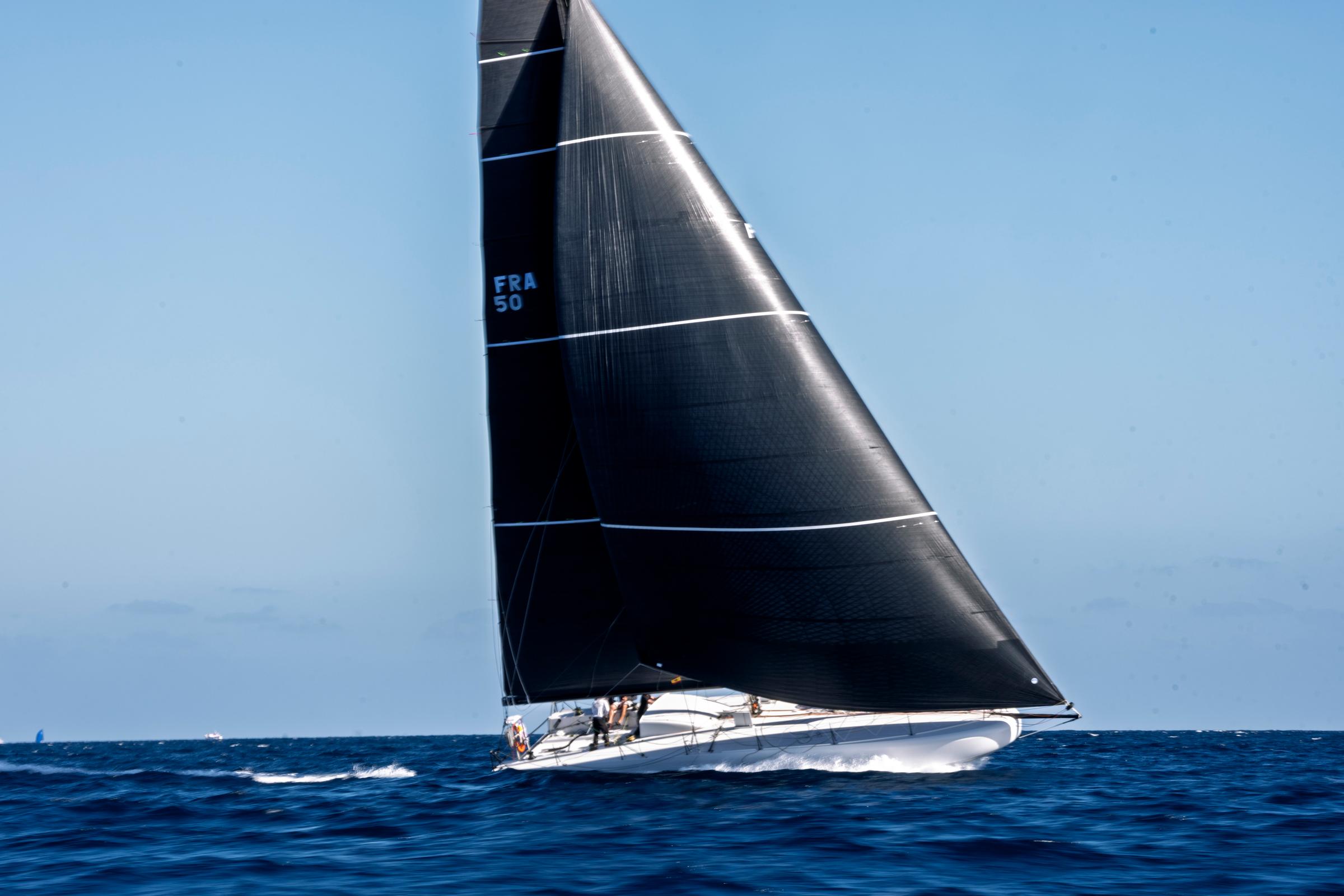 Oliver Magre's Mach 50 Palanad 4 © James Mitchell/RORC
IRC Overall: Margins tighten
On corrected time, the battle is finely poised. Palanad 4 currently leads overall under IRC, with James Neville’s Carkeek 45 Ino Noir around 80 nautical miles behind, separated by just five hours on corrected time. Raven sits third overall, only one hour adrift of Ino Noir, while Xavier Bellouard’s Lift 45 Maxitude has climbed steadily into fourth place. Andrew & Sam Hall’s J/125 Jackknife holds fifth, with Yves Grosjean’s Neo 430 NeoJivaro in sixth.
“Last night was rather busy,” commented Maxitude’s Bellouard. “The sea became chaotic as the northerly swell competed with the north easterly sea chop to push our stern hard. The flip side is that the wind picked up, quite variable and up to 27 knots, with long exciting surfs. We beat our speed record at 21.7 knots and we made very good average speed. Now I know why I built Maxitude.”
 V69 Nacira © James Mitchell/RORC
Class battles are equally intense. In IRC Zero, Raven leads convincingly from Marchi & Paternò Castello’s V69 Nacira and Paul Lucan’s VO65 Sisi. IRC One is dominated by Palanad 4, Ino Noir and Maxitude, all deeply embedded in the overall fight. In IRC Two, Jackknife maintains a strong lead, while the double-handed team of Colubi & Osselin on Pogo 12.50 Kornog 2 continues to top the two-handed standings.
At the back of the fleet but very much in the spirit of the race, Stimmy, the Finnish Sun Fast 3300 raced two-handed by Ari Huusela and Annika Paasikivi, still has over 2,300 miles to run. Huusela reports that the boat is in great shape, morale is high and, importantly, fresh food remains on the menu.
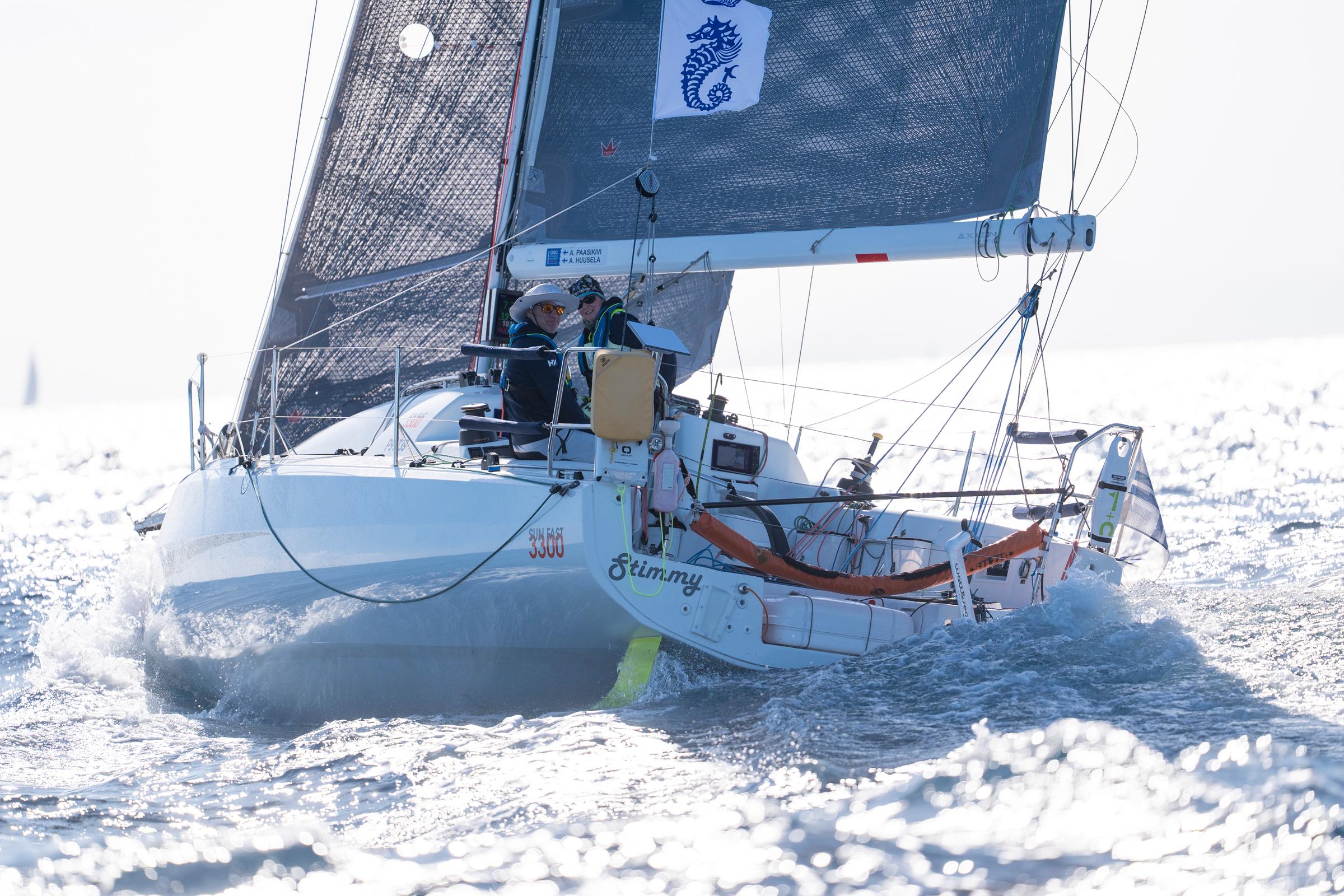 Sun Fast 3300 Stimmy © James Mitchell/RORC
A record-breaking edition in the making
With no major technical issues across the fleet and conditions aligning perfectly, the 2026 RORC Transatlantic Race is shaping up to be the fastest edition since the race was founded in 2014. The new finish in Antigua, around 300 nautical miles shorter than previous editions, combined with classic trade wind conditions, is delivering a pure, high-speed Atlantic race.
The first finishers are expected in Antigua from Friday 16 January, with the rest of the fleet following as the race enters its decisive phase for the battle for the overall win under IRC.