
Round Britain & Ireland Defines Offshore Sailors
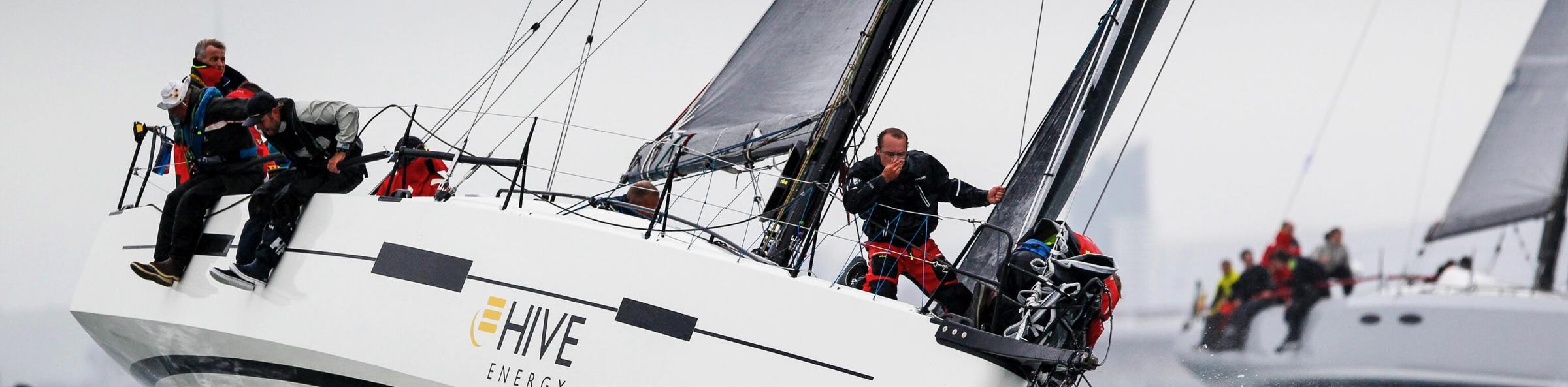
The 50th Anniversary Round Britain & Ireland Race organised by the Royal Ocean Racing Club starts in Cowes, IOW on 09 August, 2026.
At Christmas and New Year, sailors gather quietly deciding what the next big challenge will be. For some, those decisions lead to weekend racing in the RORC Season’s Points Championship, the world’s largest offshore racing series. For others next year, the RORC Series also includes a substantial offshore opportunity. The RORC Round Britain & Ireland Race only takes place every four years.
The 1,800 nautical mile non-stop race has proven in the past editions to reshape offshore sailors, even leading to careers at the very highest level of human endurance. For those sailors who win it, or even survive it well, it becomes a reference point for everything that follows. Few sailors embody that truth more clearly than round the world sailor Ollie Heer and RORC Honorary Treasurer, Richard Palmer.
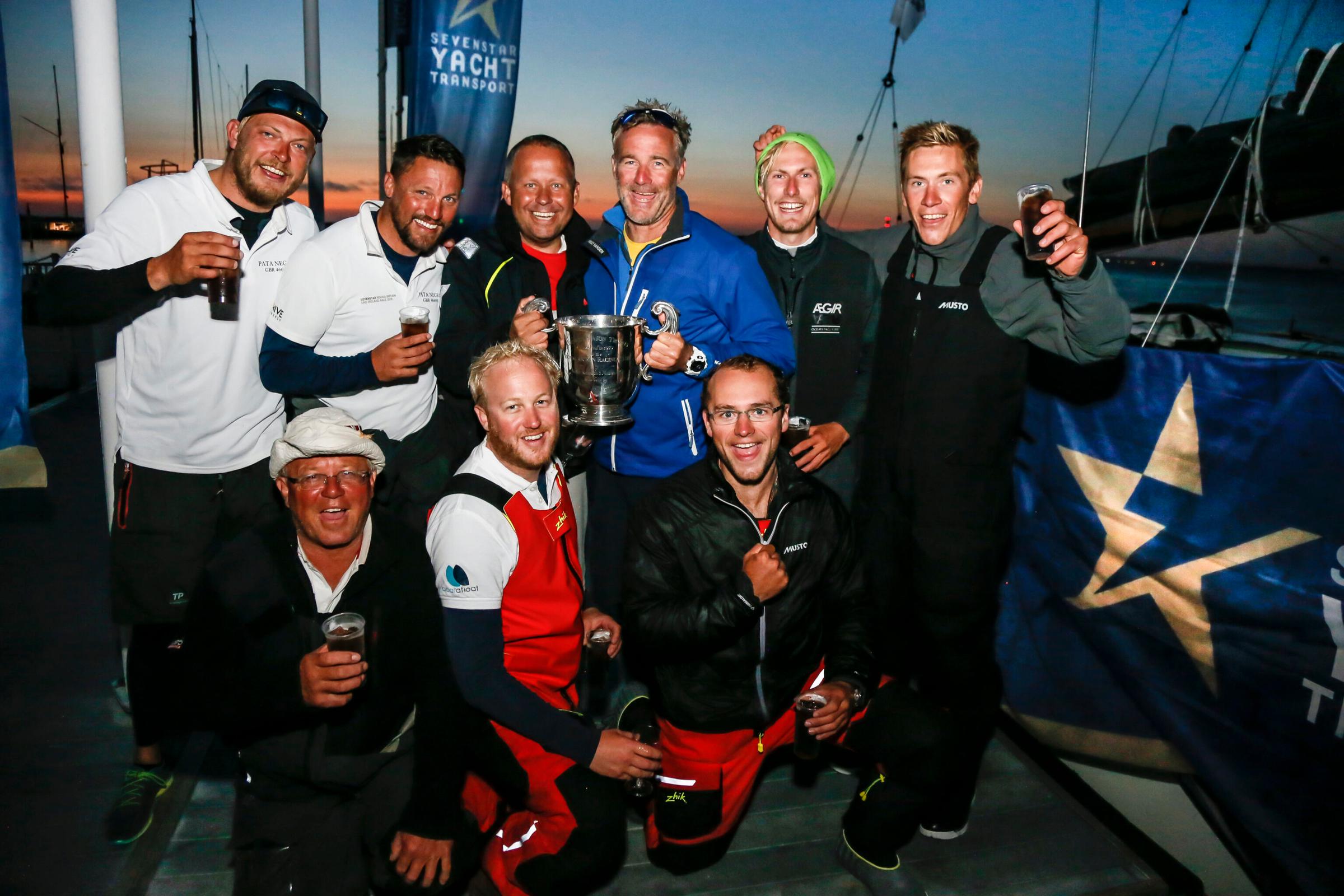 Giles Redpath's Pata Negra crew celebrate 2018 Round Britain & Ireland Race © Paul Wyeth/RORC
In 2018, a 30-year-old Ollie Heer skippered Giles Redpath’s Lombard 46 Pata Negra to overall victory under IRC in the Round Britain & Ireland Race. This led to the position of Boat Captain for Alex Thomson’s IMOCA Hugo Boss and his Vendée Globe campaign. Seven years after the 2018 Round Britain & Ireland Race, Heer competing in his own boat, completed the Vendée Globe in 99 days, five hours. Heer is now on the verge of launching his new foiling IMOCA for the 2028 Vendée Globe. Ask Heer where that trajectory truly gathered momentum and he does not hesitate. The Round Britain & Ireland Race was the door opener.
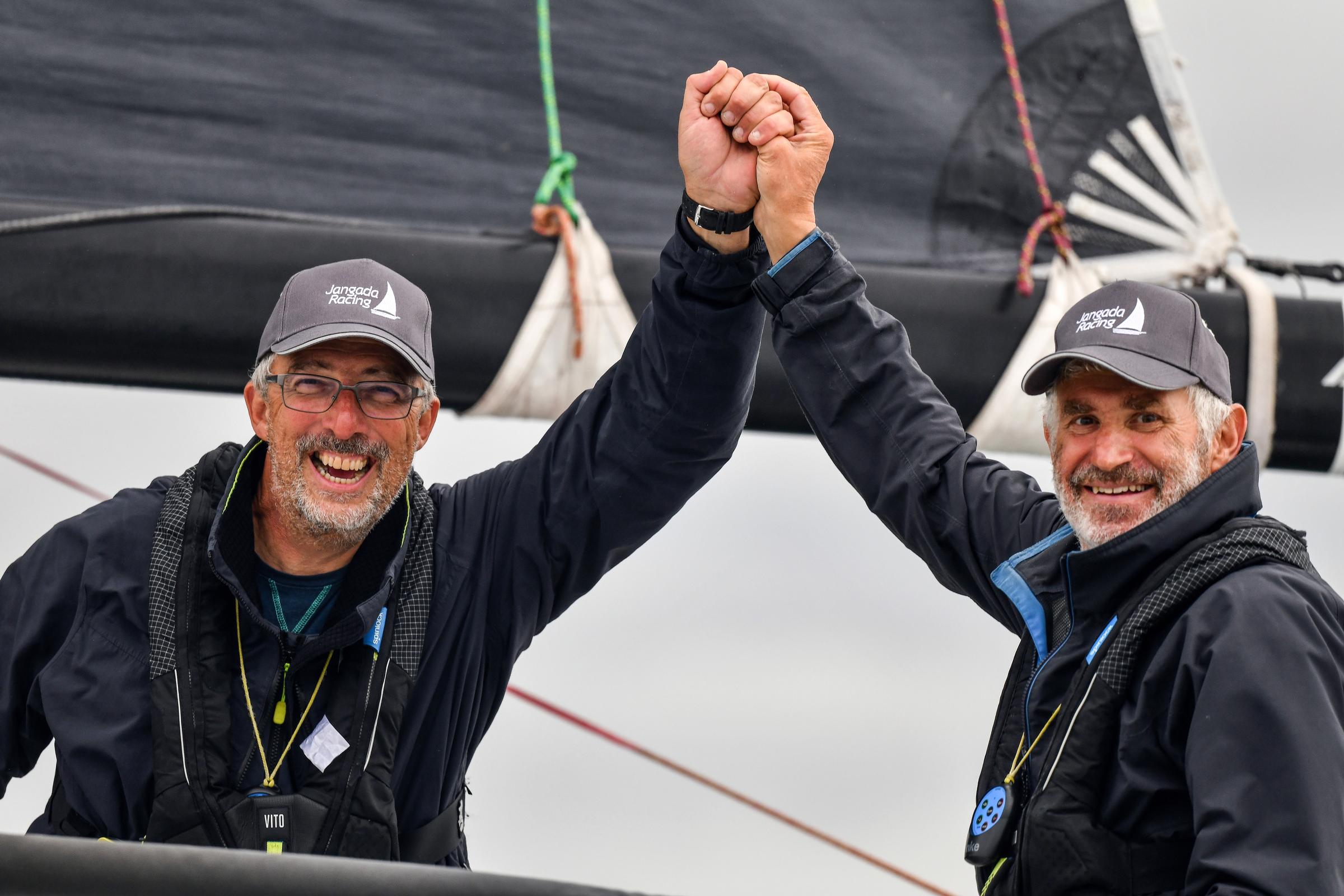 Richard Palmer & Rupert Holmes celebrate 2022 Round Britain & Ireland Race © James Tomlinson/RORC
In 2022, Richard Palmer and Rupert Holmes, racing double-handed, won the Round Britain & Ireland Race overall under IRC with JPK 1010 Jangada. In one of the closest finishes in the race’s history, Jangada’s victory was decided by just seven minutes on IRC corrected time, after nearly two weeks at sea. Jangada went on to win the RORC Season’s Points Championship and the Somerset Memorial Trophy for 2022 RORC Yacht of the Year. The Round Britain & Ireland Race proved to be a catalyst for Richard and Rupert, who are now racing around the world.
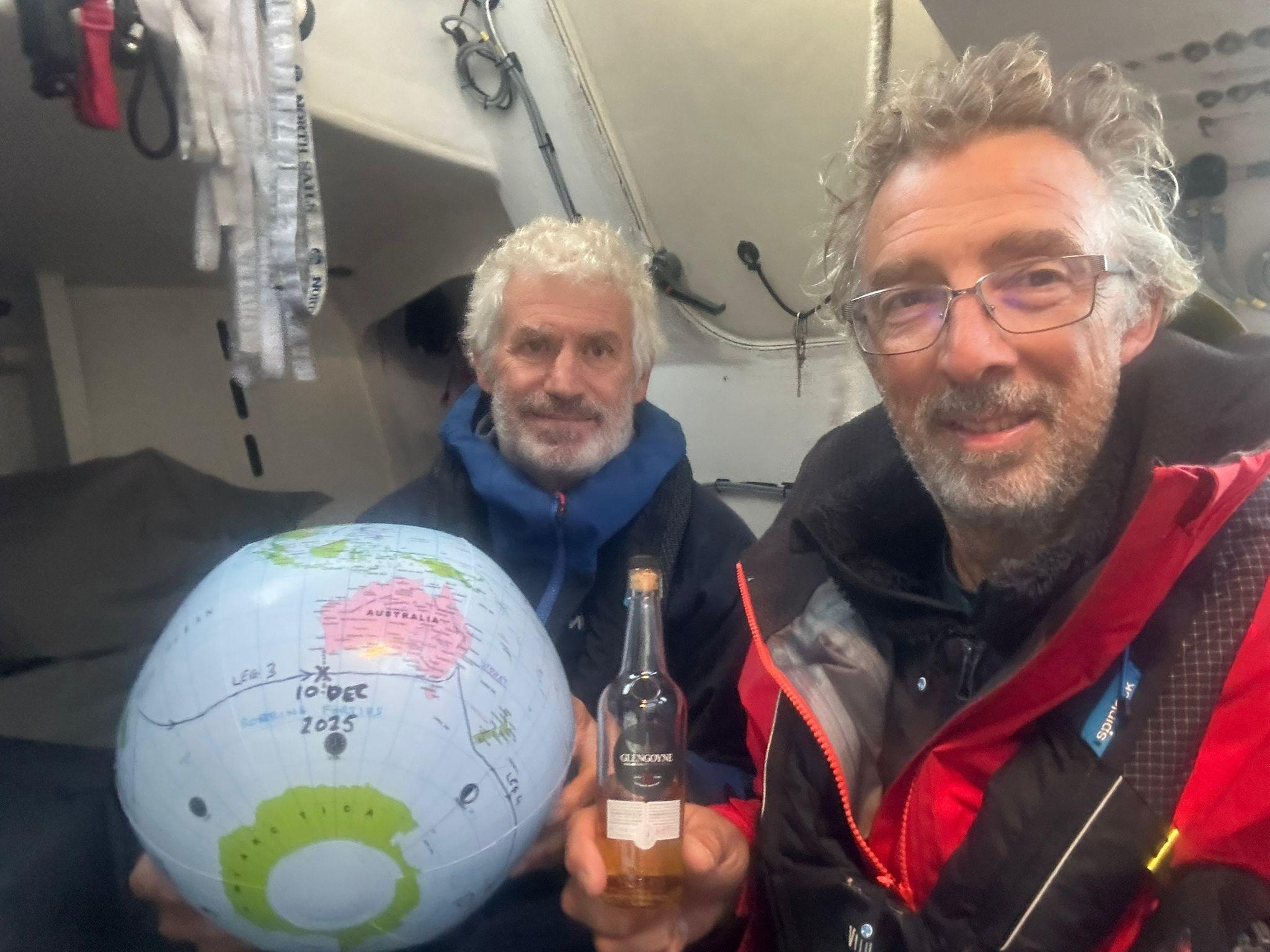 Palmer & Holmes at Cape Leeuwin in the Globe40 Race © Jangada Racing
On the 15th December 2025, Palmer spoke about that race win by satellite from the Bass Strait, deep into Leg 3 of the Globe40 Round the World Race. Palmer and Holmes had been at sea for 23 days and were battling six-metre seas on the long slog, 5,000nm, from Réunion to Sydney. Even there, thousands of miles from Britain and Ireland, the Round Britain & Ireland Race still looms large in his memory.
The Ultimate Offshore Examination
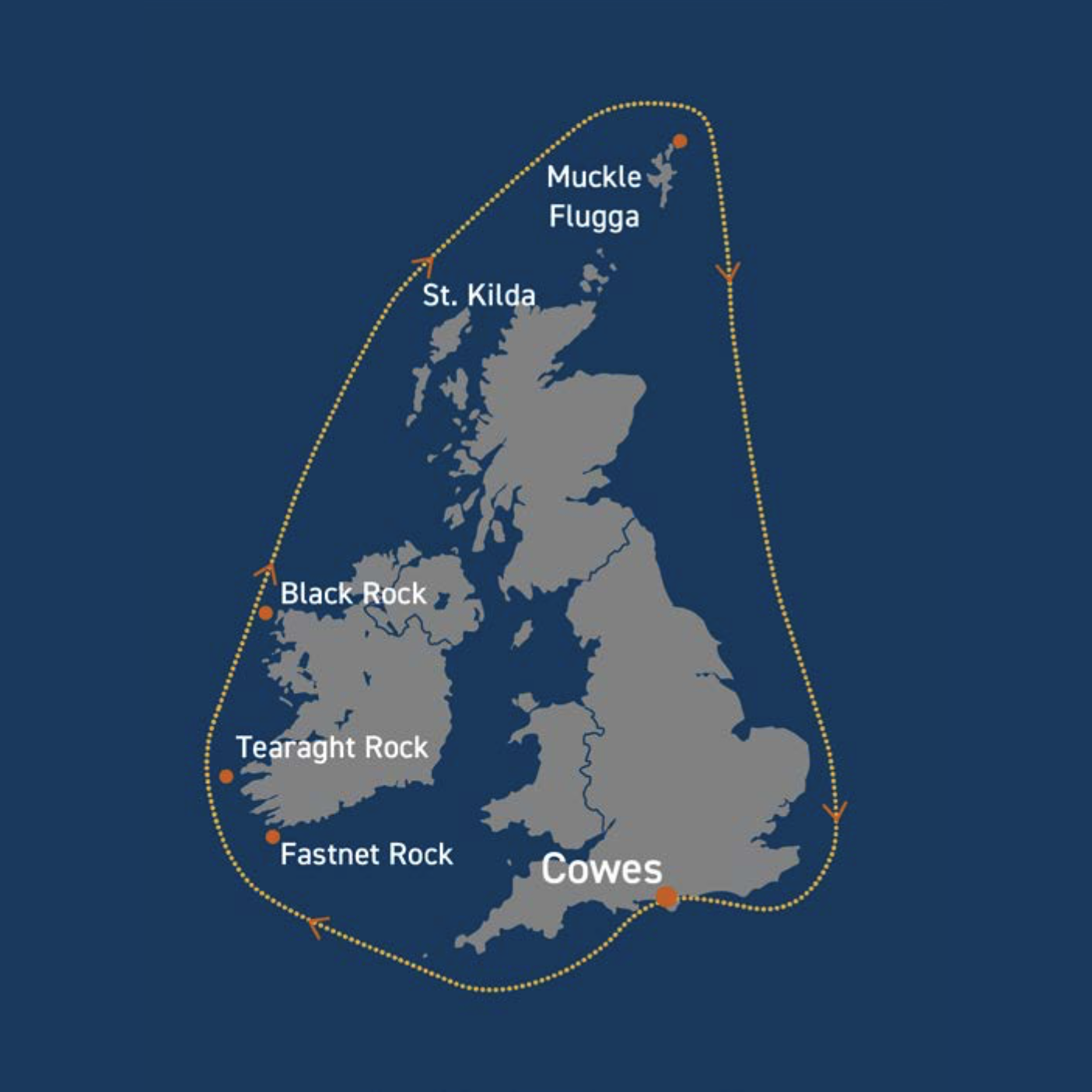
At 1,800 nautical miles, the Round Britain & Ireland Race is not about endurance alone. It is an examination of seamanship, navigation, resilience and judgement, compressed into a single relentless circuit. It begins deceptively like a Rolex Fastnet Race, before unfolding into something even more complex and nearly three times as long.
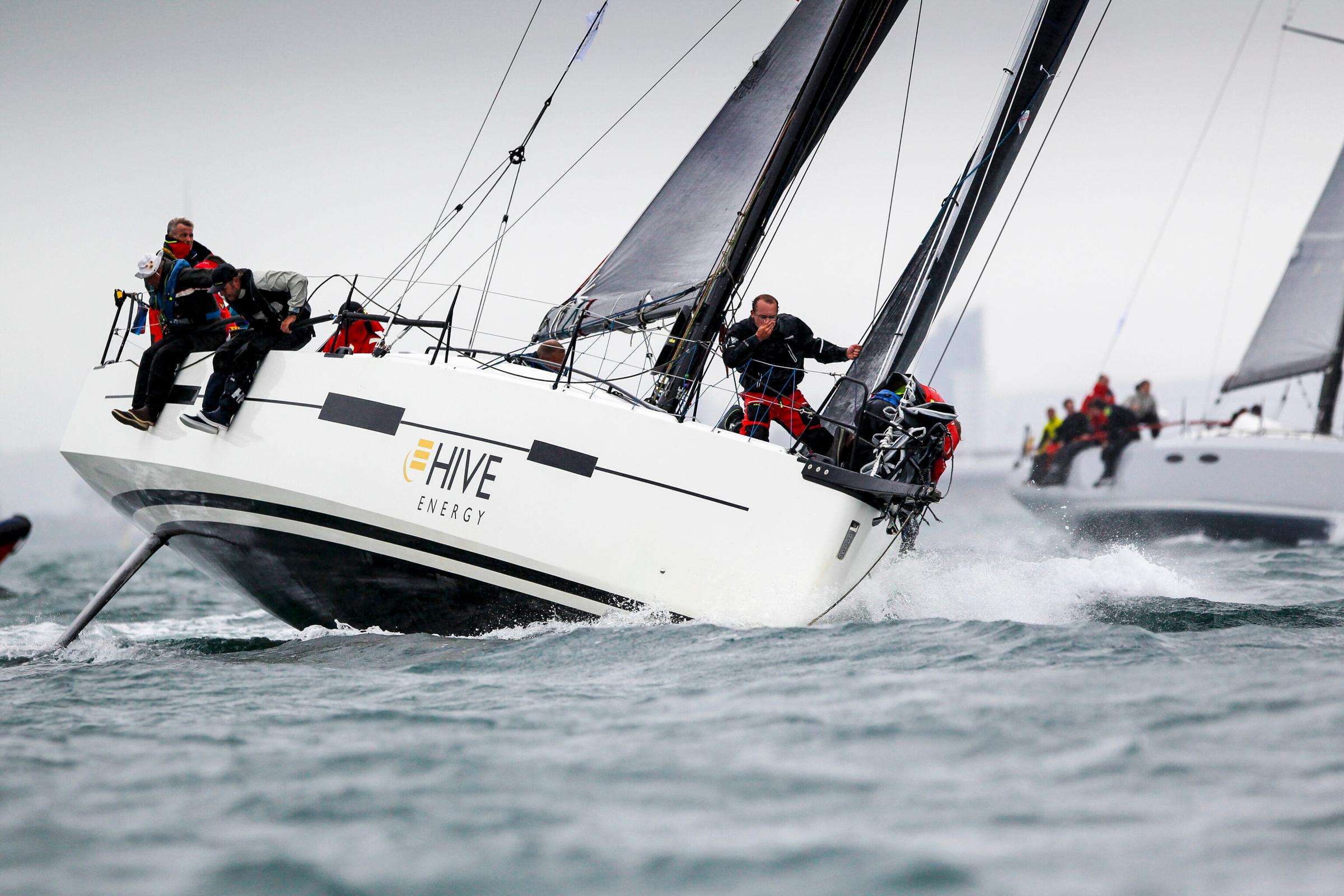 Lombard 46 Pata Negra © Paul Wyeth/RORC
For Heer, the western coast of Ireland marked the transition. “That’s where it becomes proper offshore sailing,” he recalls. “Atlantic swell rolls in unchecked, speeds build, and mistakes are magnified. You’re sailing fast, but you’re also managing risk the whole time.”
Then comes the north. Cape Wrath, tidal gates, overfalls, and weather systems colliding at the edge of the North Sea. “The race packs everything into it,” Heer says. “You go from ocean sailing to highly tactical coastal racing, then back again. There are very few races that tax everything like this one does.”
.jpg) JPK 1010 Jangada © James Tomlinson/RORC
JPK 1010 Jangada © James Tomlinson/RORC
Palmer echoes that sentiment. “There’s no let-up,” he says. “The close racing lasted all the way around. You’re constantly making decisions, constantly balancing speed against staying in the game.”
In 2022, that balance defined the outcome for Palmer’s Jangada. A prolonged high-pressure system created light winds and extreme fleet compression. Competitors could see each other on AIS from tens of miles away, making every choice visible and every mistake costly. “The finish was dramatic,” Palmer admits, “but it was really the culmination of hundreds of small decisions made over the whole course.”
Not Just Endurance, But Performance
What separates the Round Britain & Ireland Race from a survival exercise is that it demands performance sailing from start to finish. This is not about throttling back and nursing a boat home. It is about sailing fast for days on end while keeping the platform intact and the crew functional.
“You are racing to keep going,” Heer explains. “On a short offshore race, you can take shortcuts; minimum food, minimum fuel, minimum margin. Over 1,800 miles, that approach doesn’t work; things will break. The question is whether you’re prepared to deal with it?”
Preparation, Palmer insists, begins long before the dock lines are cast off. “Early preparation is everything,” he says. “Avoid last-minute changes and do the miles. Make sure the boat is maintained and that manoeuvres are second nature. The more efficiently you sail, the less you break.”
That mindset carries through into watch systems, sleep management and nutrition. “If you’re warm, dry and rested, you make better decisions,” Palmer says. “And better decisions win races.”
A Crew Challenge Like No Other
The Round Britain & Ireland Race is unforgiving on teams; fatigue accumulates, conditions shift constantly. “You need the right people,” Heer says. “Not just great sailors, but people who stay sharp when it’s uncomfortable.”
On Pata Negra, Heer remembers moments that still stand out vividly. A crew member submerged when fixing the bow which buried itself off the Irish coast, but he was clipped on. Improvised systems built mid-race to keep sails flying through calms in the North Sea. “Those nine days were packed with moments,” he says. “You don’t forget them.”
Palmer recalls the quieter moments too. Dramatic sunsets. Passing headlands steeped in history. A celebratory dram at Muckle Flugga, marking the northernmost point of the course. “Those moments stay with you,” he says. “They’re part of what makes the race special.” Interestingly, Palmer gave this interview in the brutal Bass Strait at 41°S. When racing Jangada north of Muckle Flugga in the Round Britain & Ireland Race, the team was 60°N.
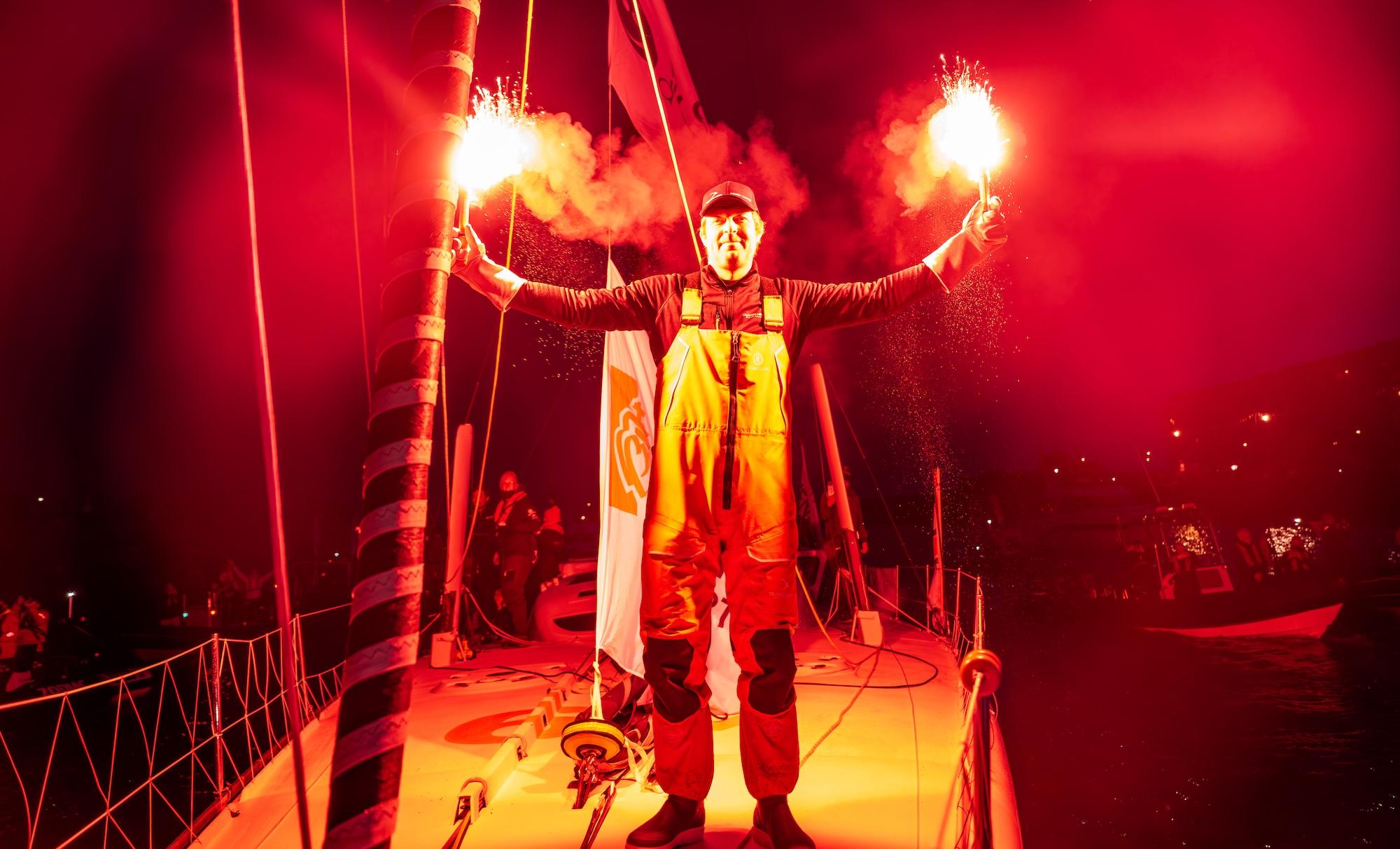 Ollie Heer finished the the 2025 Vendée Globe © PKC Media
A Race That Opens Doors
For Heer, winning the Round Britain & Ireland Race proved transformative. “It was a defining moment,” he says. “I didn’t know what was next. Then suddenly I was introduced to Alex Thomson, by his brother David who was on Pata Negra, and that changed everything.”
The race sharpened Heer’s appetite for longer, harder challenges. It exposed him to the mindset required to survive and succeed offshore when plans unravel. “You learn resilience,” he says. “And that carries straight through to transatlantic races, the Vendée Globe, all of it.”
Palmer, too, sees the race as foundational. Even now, deep into a round-the-world campaign, the lessons resonate. “You’re constantly managing physical and mental endurance,” he says. “That’s something the Round Britain & Ireland Race teaches you very clearly.”
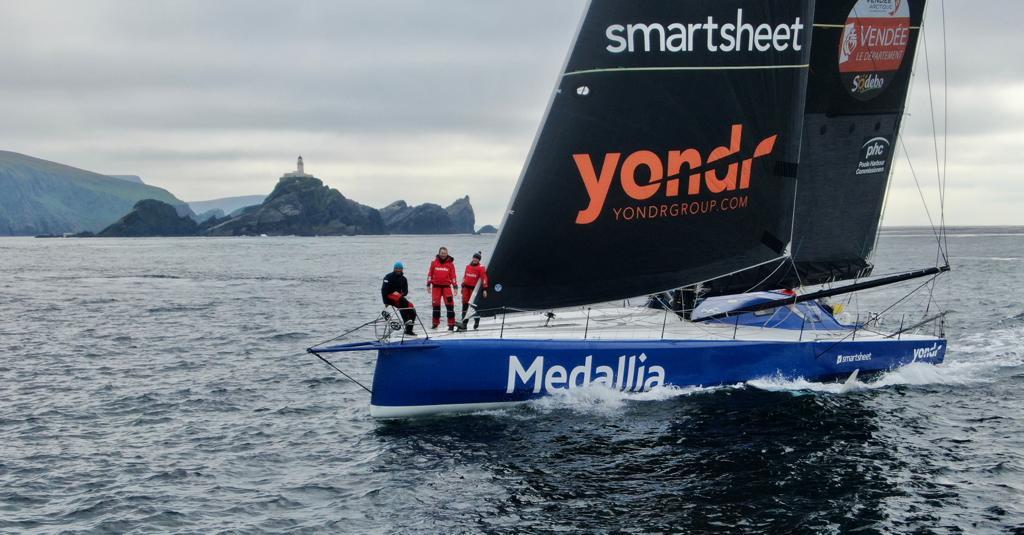 Pip Hare's IMOCA Medallia at Muckle Flugga © Team Medallia
Why the 2026 Round Britain & Ireland Race Matters
The 2026 edition will mark the 50th anniversary of this iconic race. A once-in-a-generation milestone for an event that already carries immense weight within offshore sailing.
For owners and skippers planning campaigns over the festive period, the timing could not be better. The race offers a level playing field under IRC, world-class race management from the RORC, and a course that rewards smart preparation and disciplined execution. It is a race where finishing is an achievement. Performing well is a statement. Winning is a career landmark.
As Ollie Heer puts it simply, “If you love offshore sailing, you have to be on the start line.”
Richard Palmer agrees. “Everyone who considers doing it should do it. It’s very special. Very cool. And you’ll remember it forever.”
The 2026 Round Britain and Ireland Race will start on Sunday 9th August, marking the 50th anniversary of this legendary race. Open to monohulls and multihulls under IRC, and MOCRA, as well as IMOCA and Class40, the race attracts professional and Corinthian teams alike. With record-breaking potential and unforgettable challenges, it's a truly epic offshore race.
First held by the Royal Ocean Racing Club in 1976, it has earned its reputation as one of the toughest offshore yacht races in the world. Organised by the RORC every four years, the 1,800 nautical mile challenge takes sailors on a non-stop circumnavigation of Britain and Ireland - starting and finishing in Cowes.
For on-line entry and more information visit the 2026 Round Britain & Ireland Notice Board